Why Choosing the Right Labeling Technology Matters
In modern packaging lines, labeling is no longer just the final step—it is a key factor that affects production efficiency, brand image, and long-term operating cost. At FEYVAN, we work closely with manufacturers across beverage, food, cosmetics, and chemical industries, and one question comes up repeatedly:
Should I choose a hot melt glue labeling machine or a self-adhesive labeling machine?
The answer is not simply about price. It depends on production speed, label cost, flexibility, maintenance, and future scalability. Understanding the real differences between these two technologies can help you avoid costly mistakes and build a more reliable labeling line.
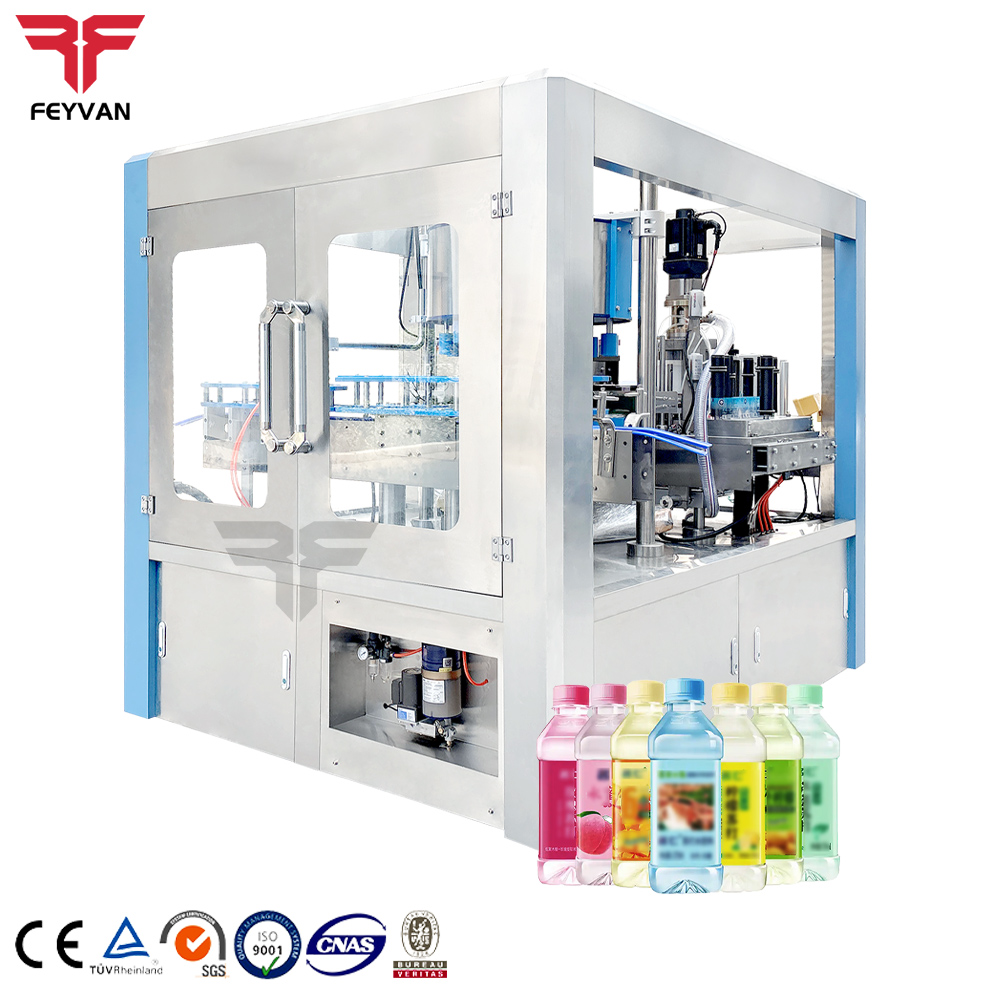
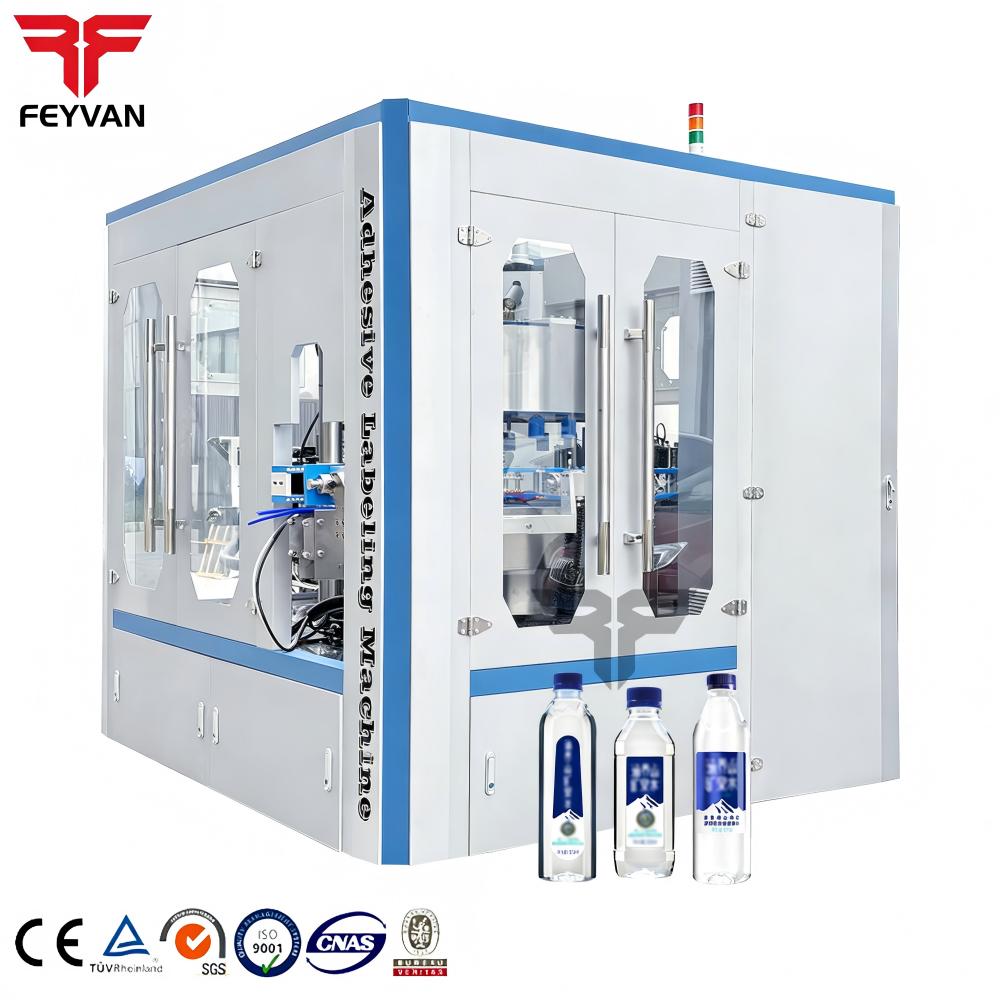
Overview of Modern Labeling Technologies
Automatic labeling machines have evolved significantly in recent years. Among all available solutions, hot melt glue labeling and self-adhesive (pressure-sensitive) labeling are the two most widely used technologies worldwide.
Both can deliver high-speed, automated labeling—but they are designed for very different production strategies.
What Is a Hot Melt Glue Labeling Machine?
A hot melt glue labeling machine applies labels using heated adhesive. The adhesive is solid at room temperature, melted during operation, applied to the label or container, and then solidifies again to create a strong bond.
This technology is widely used in high-volume, continuous production environments.
Working Principle of Hot Melt Glue Labeling
Hot melt adhesive is stored in a heated glue tank and delivered through hoses to a precise application unit. The glue is applied to the label or container surface, and the label is immediately wrapped around the product.
As the adhesive cools, it forms a firm and durable bond. The entire process takes only milliseconds, making it ideal for high-speed rotary labeling machines.
Typical Packaging Applications
Hot melt glue labeling is commonly used for:
Bottled water and soft drinks
Beer and alcoholic beverages
Edible oil bottles
Glass jars and cans
Chemical and household products
It performs especially well in wet or humid environments.
What Is a Self-Adhesive (Pressure Sensitive) Labeling Machine?
A self-adhesive labeling machine applies labels that already have adhesive coated on the back. These labels bond to the container surface when pressure is applied—no heating or liquid glue system is required.
This makes the process cleaner, more flexible, and highly precise.
How Pressure Sensitive Labeling Works
Self-adhesive labels are supplied on rolls with a liner backing. The machine dispenses each label, positions it accurately using sensors, and presses it onto the container surface.
The adhesive sticks instantly, allowing precise placement even on small or irregular containers.
Industries That Prefer Self-Adhesive Labeling
Self-adhesive labeling is widely used in:
Cosmetics and personal care products
Pharmaceuticals and health supplements
Premium food and beverage packaging
Specialty and small-batch consumer goods
It is ideal when appearance and flexibility are top priorities.
Key Differences Between Hot Melt Glue and Self-Adhesive Labeling
Although both machines automate label application, their core differences lie in adhesive technology, label materials, and machine design.
Adhesive Technology
Hot melt glue labeling relies on thermal bonding. Adhesive is melted, applied, and then cooled to secure the label.
Self-adhesive labeling relies on pressure-sensitive adhesive that sticks immediately without heat. This fundamental difference affects speed, maintenance, and operating cost.
Label Materials and Supply Formats
Hot melt glue systems usually use cut paper or plastic wrap-around labels, which are cost-effective and suitable for large volumes.
Self-adhesive systems use die-cut labels with liner backing, offering higher precision but higher material cost.
Machine Structure and Automation Design
Hot melt glue labeling machines include glue tanks, heating systems, and adhesive application units.
Self-adhesive labeling machines focus on label dispensing, tension control, and sensor-based positioning, resulting in a cleaner and simpler mechanical structure.
Rotary Hot Melt Glue Labeling Machine vs Rotary Self-Adhesive Labeling Machine
 Feyvan Product brochure.PDF
| Comparison Item | Rotary Hot Melt Glue Labeling Machine | Rotary Self-Adhesive Labeling Machine |
Labeling Technology | Hot melt adhesive applied by heating and cooling | Pressure-sensitive adhesive (pre-coated labels) |
Label Type | Wrap-around labels (paper / plastic / OPP) | Die-cut self-adhesive labels with liner |
Adhesive System | Glue tank + heating unit + application rollers | No glue system required |
Production Speed | ⭐⭐⭐⭐⭐ Ultra-high speed (up to 30,000–60,000 BPH) | ⭐⭐⭐⭐ High speed (10,000–30,000 BPH) |
Labeling Accuracy | High consistency, ideal for wrap-around labels | Very high precision, ideal for transparent labels |
Best for Continuous Production | Excellent | Good |
Changeover Flexibility | Moderate (best for long production runs) | Excellent (fast SKU and bottle changeover) |
Label Cost | Low (economical for mass production) | High |
Machine Initial Cost | Higher | Medium |
Long-Term Operating Cost | Low | Higher |
Maintenance Requirement | Medium–High (glue cleaning required) | Low–Medium |
Energy Consumption | Higher | Lower |
Environmental Impact | Low liner waste | Liner backing waste |
Suitable Container Materials | PET, glass, metal, HDPE | PET, glass, metal |
Performance in Wet Environment | Excellent | Good |
Typical Industries | Beverage, beer, edible oil, chemicals | Cosmetics, pharma, premium food |
Label Appearance | Standard commercial look | Premium, high-end appearance |
Ideal Production Strategy | High volume, stable SKUs | Multi-SKU, short runs |
Production Speed and Line Efficiency
For ultra-high-speed production lines, hot melt glue labeling machines are often the preferred choice. Rotary hot melt systems can label tens of thousands of containers per hour with consistent performance.
Self-adhesive labeling machines also offer high speed, but efficiency depends more on label cost and changeover frequency.
Labeling Accuracy and Visual Quality
Self-adhesive labeling machines deliver superior placement accuracy, making them ideal for transparent labels, small containers, and premium packaging designs.
Hot melt glue labeling provides reliable consistency, especially for wrap-around labels and standard container shapes.
Cost Comparison: Equipment, Labels, and Operation
Initial Investment
Hot melt glue labeling machines typically require a higher initial investment due to heating systems and glue application components.
Self-adhesive labeling machines often have a lower entry cost because of their simpler structure.
Long-Term Label Cost
This is where hot melt glue labeling shows a major advantage. Wrap-around labels are significantly cheaper than self-adhesive labels.
For high-volume production, the savings in label cost can far exceed the difference in machine price.
Maintenance, Cleaning, and Reliability
Hot melt glue labeling machines require regular cleaning and proper temperature management to ensure long-term stability.
Self-adhesive machines are cleaner to operate but require attention to liner waste, dust control, and static electricity.
Environmental and Sustainability Factors
Hot melt glue labeling produces minimal liner waste, while self-adhesive labeling generates backing paper that must be recycled or disposed of.
Flexibility and Changeover Capability
Self-adhesive labeling offers faster changeovers and greater flexibility for multi-SKU production.
Hot melt glue labeling is best suited for long, stable production runs.
Application-Based Recommendations
Beverage Industry
Hot melt glue labeling is the industry standard for bottled water, soft drinks, and beer.
Food, Condiments, and Edible Oil
Both technologies are widely used depending on product positioning.
Cosmetics and Personal Care
Self-adhesive labeling is preferred for premium appearance and frequent design changes.
Chemical and Industrial Products
Hot melt glue labeling offers superior resistance and durability.
Common Mistakes Buyers Make
Many buyers focus only on machine price and ignore label cost, maintenance requirements, and scalability.
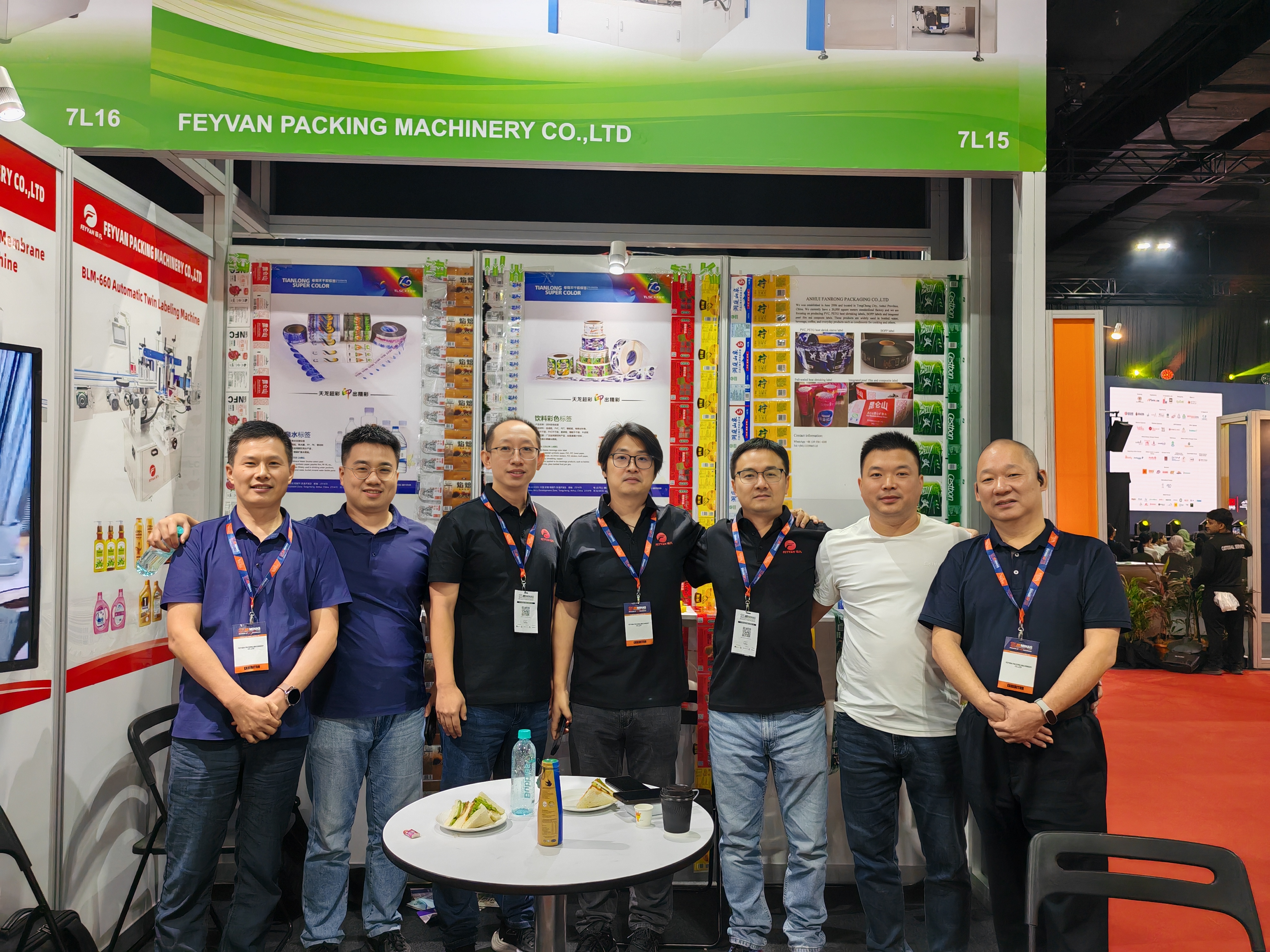
How FEYVAN Helps You Choose the Right Solution
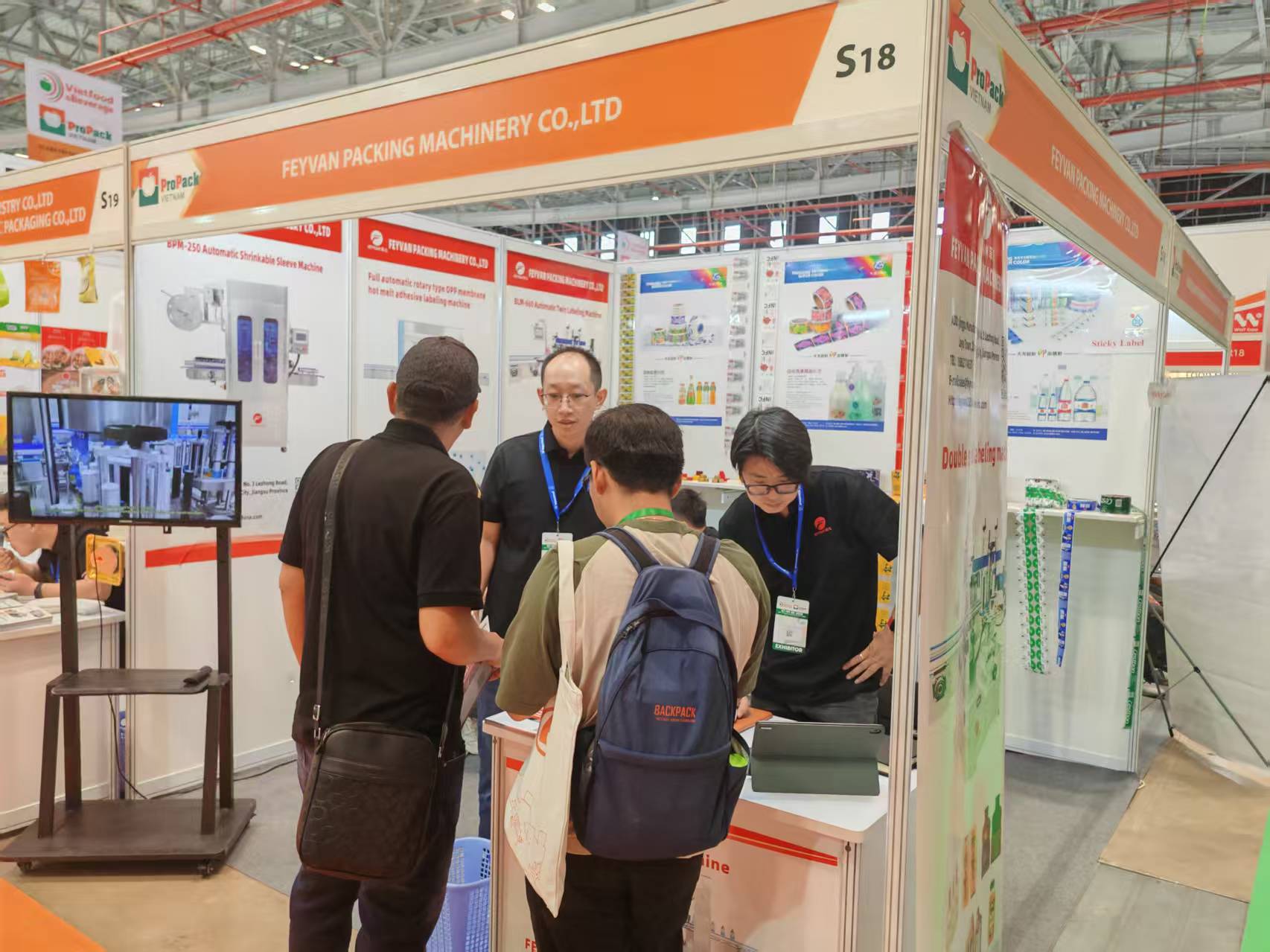
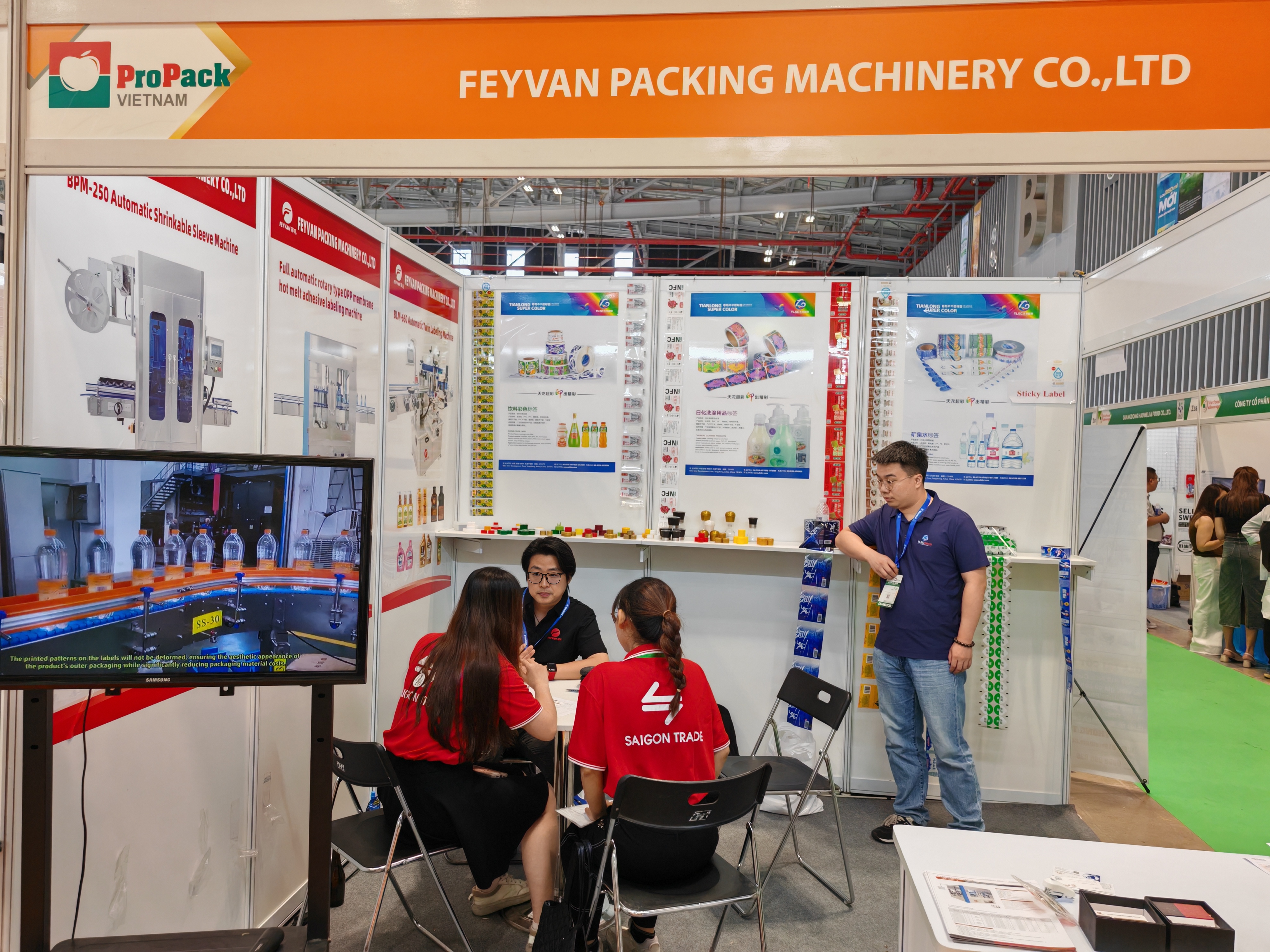
As an experienced labeling machine manufacturer, FEYVAN provides professional application analysis, customized machine design, and long-term technical support.
Final Thoughts
There is no universal best labeling machine—only the right one for your production needs.
With the right technology and the right partner, your labeling system becomes a competitive advantage.


